The hot, dry season is now truly and thoroughly upon us here
in Kedougou. What does that exactly
mean? It would probably now be a good
time to highlight the different seasons we experience in Senegal. In the United States we generally have four
seasons: spring, summer, autumn, winter.
Or, as the joke goes, in San Diego, we have two seasons: nice, and very
nice. In Senegal, however, there are
only two seasons: dry season and wet season.
I suppose that hot season can further be subdivided into hot dry
season and cold dry season. Hot dry season is exactly what it sounds like, it is hot, and it is dry. I unfortunately do not have a thermometer in
my hut, but I’m sure that the daily temperatures have been 100+ Fahrenheit since
March. I’m sure we’ve all experienced
such heat waves in America, but unlike back home, in my hut there is no air
conditioning, and there are no electric fans.
It’s just sitting in your bed at two in the afternoon bathing in your
own sweat. It’s feeling stifled to death
trying to go to sleep at 11:00 with the temperatures still in the high 90s in
your hit, just wanting to pass out. It’s
waking up at 3:00 AM still sweating profusely and grabbing the nearest thing to
fan you. It’s days spent wishing for AC,
wishing for swimming holes, wishing for ice cream, or cold water, or cold, cold
cold anything.
That is the downside of hot dry season and I’m sorry for
sounding melodramatic in my description of it, but it can be truly
miserable. But there is another side to
this season. There is truly a yin to
this yang (wait, which one was the good one and which one was the bad one? Let’s just assume that I chose the right
ones, I mean, it’s like a 50% chance, those are pretty good odds). And this good side, this silver lining to the
oppressive cloud of dire heat (metaphorically, if only there was literal cloud
coverage), yes, this redeeming quality, is that it’s also mango season.

Apparently "mangoes" isn't spelled "mangos"
I’m not sure if you know what a mango is. Ok, most people know what mangoes are, but I
never really ate them until I came to Senegal.
That’s right Jack, not only have I now eaten a mango, I eat upwards of 5
or 6 every day when I’m in village. It’s
like the desiccating heat is bulwarked by the promise of sweet sweet
mangoes. Seriously, they’re like a
heaven-send. Basically every other tree
in my village is a mango tree. We rest
in the shade of mango trees on these hot days.
And when there aren’t enough mangoes falling naturally from the trees,
the people take over. They get large
bamboo sticks and use them to whack the mangoes to the point that they fall off
the tree.

Small boy, get me mangoes!
As the lower mangoes get fully harvested, they attach longer
and longer bamboo shafts until they become top-heavy and unwieldy. But my Senegalese brethren manage these
sticks with the dexterity I’m sure a Greek hoplite would have (or a Macedonian phalangite. I sometimes wonder if using these sticks to
knock down mangoes wouldn’t be great spear training in days past.)
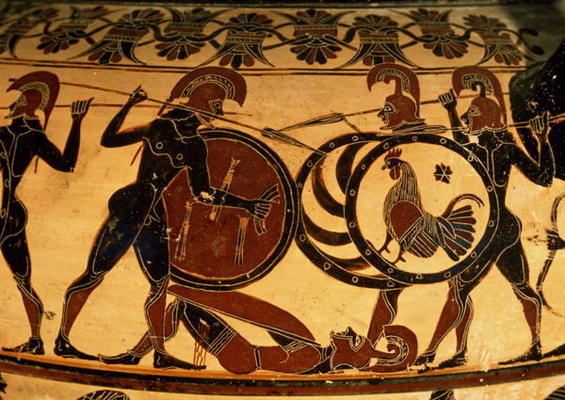
I've always loved black/red pottery
But the overall best part about mango season are moments like this. In my village there are a lot of old
men. These old men just kind of sit
around all day and talk and drink tea.
It is rare to see them move substantially, and even rarer to see them
move rapidly. So picture this, I’m
sitting under a mango tree drinking tea and talking with a bunch of old
men. All of a sudden I hear a *crack*
from the tree above as a mango comes tumbling down to the earth. And like that, the old men look around at
each other, and then jump up and sprint to where the mango has fallen, trying
to get to it first. And the first man
who gets there lets out a joyous laugh of victory as if he’d won a
marathon. Seriously, those old men book
it. I’d never seen them run so fast as
when trying to get to a mango first. Of
course, the most hilarious is when they all jump up trying to get the mango,
only to get there just as a cow had arrived to eat it first. Oh, the looks of incredulity. Anyway, the point of this blog is that
although the hot season is more or less unbearable, it still has its good
parts, and seeing 70 year old men chasing after mangoes like school-children
makes it all almost worth it. Almost.
Some pictures:


Some pictures:
