Saturday, July 26, 2014

To bedik or not to bedik

Comfort can be a dangerous thing.  That is because effort takes… well, effort.  Comfort is easier, more practical.  Putting oneself out there, trying new things, meeting new people, it can be uncomfortable.  That is because we find comfort in repetition, in the things we know; we take comfort in the common.  Trying new things, meeting new people, it introduces so many variable, so many unknowns, that it is hard not to pass it up and avoid it altogether.  I find myself in this mindset often, and it is part of the personal growth I wanted to achieve during my time here in Senegal.  The will to leave my hut and greet people, to meet tons of new people and experience something completely foreign from everything I've known.  A new culture, new food, new people.  I wanted to break away from the comfortable.  But the thing with personal growth is that it is something you have to do every day.  Every day you have to wake up determined to be the person you want to be.  It is very difficult not to relapse back into complacency, to shirk potentiality for comfort.  This is a story that highlights that struggle.

Now that the rainy season has truly and fully come, the work of all Peace Corps volunteers cranks up a notch.  For agriculture volunteers it’s the planting season, their time to extend seed varieties and introduce better practices for farming.  As for us health volunteers, rains bring the mosquitoes, and mosquitoes bring malaria.  This is why during the rainy season just about every health volunteer shelves their other projects for a while to focus on malaria work.  In Kedougou we are working on a project called PECADOM Plus.  I’m not sure if you remember from my blog posts from last year, it was when I drove around the Saraya district to random isolated villages to shadow malaria health workers.  This year the program has expanded to the entire Kedougou region, so I have more localized work around my village.  As such I am partnering with the Thiabedji heath post to supervise seven DSDOMs there; the malaria health workers.  This included overseeing the practicum training of the DSDOMs and formation of women’s support groups in the villages where the DSDOMs work.

Alright, now that the introduction is out of the way, the background being established, to the actual story itself!  So I found myself, as I often do, on a bush path bicycling under the hot African sun.  Although it’s rainy season, it is still really hot.  It’s always hot.  You get used to it.  So I was biking back from the Thiabedji health post, which is about 18 kilometers from my village.  I had just spent the whole day, and the 3 days before it, supervising the DSDOM practicums, and was understandably tired from it.  As I was leaving the health post I realized that my water bottle was empty.  This usually wouldn’t be that bad of a thing, but since it is Ramadan, it is pretty awkward and somewhat impolite to ask to fill my water bottle.  During Ramadan, Muslims fast both food and water from sun-up to sun-down every day.  I’m sure that they would have given me water if I’d have asked, but I didn’t want to seem inappropriate.  So I figured, it’s only 18 kilometers, how hard could it be?   Right?

So back to where I left off in the story, I was biking through the bush, half way back to my site.  This was about the point where it hit me just how truly thirsty I was.  

still unamused

I had been working for 4 days, biking back and forth, just generally fatigued.  I figured that when I got to Guingara, which is about 5k from my village, and conveniently Christian-Animist, I’d ask for water there.  And that’s when it happened.  As I approached I heard singing and chanting and the clanging of bells.  I crested a hill and saw before me a large crowd of people, seemingly milling around.  When I got there I realized that they were all using hand-hoes to remove weeds from the field.  I had stumbled upon a Bedik kille.

So kille is a Pular word meaning a group work day.  Basically everyone gets together to help someone with a task, whether it’s plowing or threshing or thatching a roof.  Bedik killes take it up a notch in that they have people dress up in traditional grass shirts and bark shorts wearing masks and clanging bells.

they also like to dance

  And they drink palm wine.  I mean, a lot of palm wine.  When I got there a lot of them were already fairly thoroughly intoxicated, which made them that much more enjoyable. 

I got off my bike and asked for some water.  A woman grabbed a gourd bowl and dunked it in a benoir to pull out some water for me, which I drank greedily.  Only in retrospect did I notice how murky the water was and that we were right next to a river.  Yeah, I think I drank river water that she was using to wash her clothes.  Oh well, we’ve all had giardia, right?  They also brought out palm wine and offered it to me.  As I was still thirsty and it seemed cleaner than the murky laundry water I accepted.  So there I was, having quenched my thirst, ready to bike back to my village.  They told me to stay and hang out and drink palm wine and get to know people, and that’s when my dilemma arose.

See, I really wanted to get back to my site.  I really wanted to lie down on my bed, drink some lemonade from drink mixes, maybe eat some beef jerky and read a little (Lord of the Rings anyone?)  Maybe I’d take a nap, who knew?  But I did know that comfort was calling in the face of activity.  I was so set on getting back to my room.  After all, I didn’t know these people, I’d have to awkwardly greet them, and I wouldn’t really know what to do.  In other words, it would put me out of my comfort zone.  So I thanked them for the water, said I’d see them when I’d see them, and then got on my bike and started to ride off into the sunset.  Well, I was actually heading east and it was 3:00, but all dramatic exits should be into the sunset, shouldn’t they?  But alas, life is never quite as epic as you want it to be.  Contemplating the dramatics of my exit, I got on my bike and was gone.

It was about 150 meters later when I stopped.  Why was I biking back to my hut again?  So that I could take a nap?  So that I could avoid talking to people and read a book?  Is this why I had come to the Peace Corps?  I had wanted to get an in with the Bediks for a long time, but now that the opportunity had arisen, I was skulking away.  That’s what I do.  I imagine all these great things that I will do, make all these plans and form all these ideas, but when it comes to actually executing them, I can never pull the trigger.  This is because I am always tempted with the promise of comfort.  Like I said before though, personal growth isn’t deciding you want to be a certain way, and then bam, you start acting like it.  It is a daily struggle, a mindset you have to renew every morning.  I have forgotten that lately, accepting complacency rather than striving for better.  All this ran through my head as I biked away from the work party.  And you know what, I am proud to say that I turned around and biked back.  Sure, it would be an effort, but I knew that at the end of the day I’d be happier this way.  Even more so, I knew that if I didn’t turn back, I would always regret it.

So this is an anecdote highlighting a daily struggle I find myself in.  I regret to say that many days I lose that battle and hide out a bit too long in my hut, or cut my conversations short because I don’t want to trudge through Pular, but it is those little victories that reinvigorate us.  That give us the confidence that maybe it isn’t as uphill of a battle as we think.  Sometimes you have to turn around and get back in the fight. 

This is also the story of how I got really drunk with a bunch of Bedik dudes in the middle of the wilderness and helped them plow a field for fonio.  It’s a story of how I spent an afternoon getting to learn about the Bedik people and making friends.  The story of how I got a new Bedik name: Jean Baptiste doondu Keita (apparently in Bedik culture all male children are named according to when they are born.  Doondu is the name for the third-born male.  They then also have a Christian name).  And lastly, this is the story of how I stumbled back to my village just as they were breaking fast and was able to keep my composure through the whole thing.  After all, it was just another day in the Peace Corps.  Sure most days are pretty boring, but there is always the chance of experiencing something truly extraordinary.  What matters is that we are bold enough to take the chances to experience them and not let them slip by.

Saturday, July 12, 2014

The Scouring

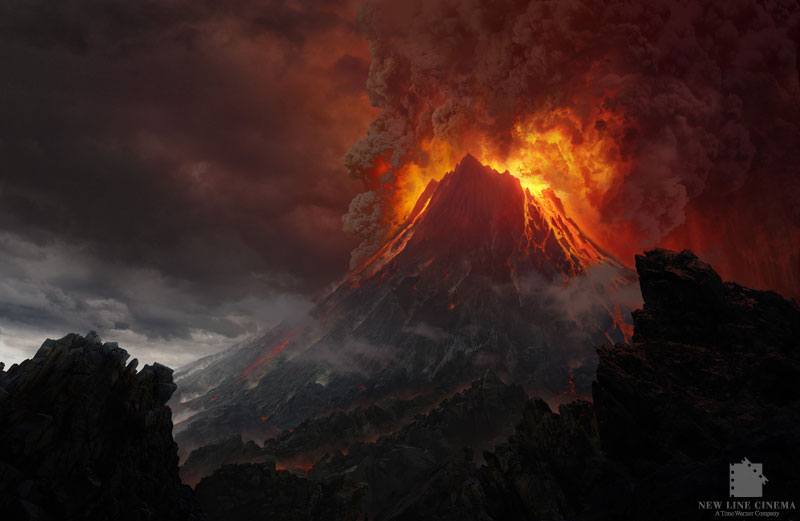
I’m not sure if you’ve ever read the Lord of the Rings.  I hope that you have, as I consider it a great novel, but I understand if you haven’t.  Some people find the language used and Tolkien’s style to be a bit too archaic for a modern audience; and who wants to hear the professor drone on and on about forests and dells and vales, pages upon pages.  I personally think that this adds to the charm, but can see how it could seem a bit overly verbose.  Well, if you haven't read the book, I at least imagine that most of you have seen the Lord of the Rings movies.  They are rather fantastic and present a great, if not wholly accurate to Tolkien’s original work, story.  You might be asking yourself why I am talking about the Lord of the Rings so much in my blog, besides the fact that I am a big fan (John Kelley, I’m still expecting that Tolkien trivia-off).  I bring it up because there is a part of the book that I think sums up how I felt while in America.  It takes place at the end of the book (spoiler!!!), after Frodo has destroyed the ring. (Though it wasn’t really Frodo who achieved this in the end, as he ultimately failed in his quest to throw the ring into Orodruin, being overcome by the corrupting power of it.

cast it into the fire!!!

 It was Gollum whose actions ultimately led to its final destruction.  In a way then Frodo was able to fulfill his quest because it was Frodo’s mercy, allowing Gollum to live, that precipitated the ring's destruction.  I guess this points to Tolkien’s notion of mercy and redemption, that through mercy greatness can be achieved.)

Anyway, so Frodo is on the road back home.  And whereas in the movie he finds the Shire as good as ever and a warm welcome waiting, the book is quite different.  Frodo comes back to a Shire that has been corrupted: trees have been cut down, the people bullied in a police state, even the jolly mayor was rotting in some cell somewhere.
.
Isn't that a much better ending?

Of all the changes made in the film, I think that this is one of the most egregious, as it is thematically imperative to the narrative.  Frodo can go back to the Shire, but he can never truly go back home.  Home was his innocence, it was his naivete, it was the world he knew before he realized that there is a bigger, grander, more dangerous world out there.  It is his youth, that ultimately can never be re-obtained, and the filter through which he see the world as adults is irrevocably set over his eyes.  And after all, isn’t that the point of a hero’s quest?  He leaves young and innocent, goes on a bunch of adventures, learns a bunch of stuff, and comes back home a changed person.  He is then able to share what he has learned to better the people back home (I think that’s what Joseph Campbell was talking about, I never read his book).

Something about a cycle

 And while he brings a boon, he is forever restless, filled with wanderlust, dissatisfied with a life that was once enchanting, but now seems boring.  This is just like Bilbo coming back after an adventure of his own.  Though he was happy to be back home, he was never truly content or joyful, for he ever heard the call of the distant mountains, the falls of Rivendell, the very call of adventure.

Now this might seem a bit extreme, and I admit that I am speaking in hyperbole, but it is quintessentially the same idea.  When I came back to America I was amazed at how quickly I fell back into my old habits.  The first day you get back is amazing.  What is this comfortable stuff under my feet?  Carpet? Unheard of.  Because it's really the little things you come to appreciate after being devoid of them for so long.  Sitting on a comfortable couch after a long day.  Taking a warm shower under a faucet with running water.  Feeling clean.  I mean, truly feeling clean.  Here in Africa we take showers rather frequently, but I never feel truly clean.  This is probably because while in America, when you are indoors, you are isolated.  Nature is outside, you are inside.  In Africa, I never truly escape nature, what with the crickets and camel spiders and frogs and lizards and mice that live in my hut.  I mean, my roof is essentially grass and my doors are more nominally so than substantively.  That first day is great, looking down at your clean feet in a climate controlled room. 

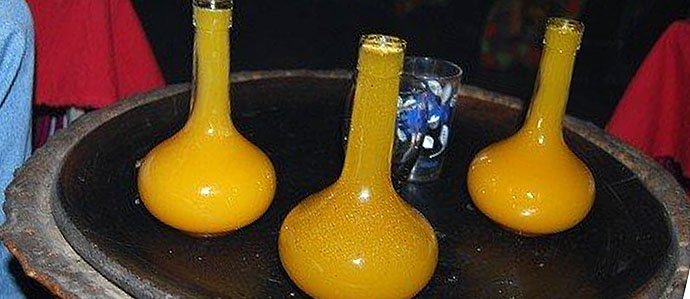
And then there is the food.  By god, the food!  The first thing most people have asked me when I returned to Senegal was “what was the first thing you ate when you got to America?”  I thought I’d take this time to answer this question: it was beef enchiladas.  So Good.  Just think of all the food: carne asada burritos, fish tacos, pizza, hot dogs, lasagna, hamburgers, Indian food, Ethiopian food (gotta get that tej!), dim sum, sushi, gyros, bacon.  You get the idea. 

Tej!!! It really is half the experience!

As I was saying before I got distracted by food, after that first day it is very easy to fall back into old habits, and whereas the thought of a good beer was once amazing, it becomes once again commonplace.  America truly is the land of plenty.  After a week my whole year in Africa felt like a dream that I had just woken up from, reemerging into reality.  This was actually at first rather concerning, after all, what had I spent all this time there for if everything went back to basic normality (normalcy is technically improper, being coined by Harding in his famous “return to normalcy” speech.  Wait, I just looked up the Wikipedia page, apparently it had been in English dictionaries dating back to at least 1867.  Harding himself said that he looked in the dictionary and couldn’t find normality, but could find normalcy.  Fascinating).  Anyway, whereas habits returned to normality, I never truly felt that I had mentally.  I’m not saying that I went crazy in Senegal, though I haven’t had that checked… I’m just saying that I was never able to get back into that pre-Senegal mindset.  There was that lingering wanderlust, that vestigial pull of nascent adventurism.  Like Frodo going back to the Shire, I felt like I wasn’t able to truly go home.


And what does that mean for me now?  I’m not all that sure.  I once saw myself as the type who would live in America my whole life, getting an entry level career job and working my way up.  That’s the modern American dream after all.  I’m not sure if I’d be satisfied with that anymore.  I’m not saying that I never want to settle down, but this is the time to explore.  I’ve heard the quote that we are an unfortunate generation because we were born too late to explore the globe, but too early to explore the galaxy.  This might be true, that there is no more uncharted land, but there is so much exploring that we can do.  Though we might be able to look at satellite images of the amazon rainforest, that is not the same as going there and truly exploring it.  I feel like I am rambling.  The point that I am trying to make is, my time in America has shown me that there is a seed that is planted in anyone who lives abroad, such that America loses the pristine shine of our youthful understanding of it.  Maybe this means I want to stay abroad for now, and not permanently move back to America.  I don’t know, but whereas that uncertainty was once terrifying, I now find it exhilarating.  I suppose that is the nature of personal growth.

Friday, May 16, 2014

We will cross the river and rest in the shade of the (mango) tree

The hot, dry season is now truly and thoroughly upon us here in Kedougou.  What does that exactly mean?  It would probably now be a good time to highlight the different seasons we experience in Senegal.  In the United States we generally have four seasons: spring, summer, autumn, winter.  Or, as the joke goes, in San Diego, we have two seasons: nice, and very nice.  In Senegal, however, there are only two seasons: dry season and wet season.  I suppose that hot season can further be subdivided into hot dry season and cold dry season.  Hot dry season is exactly what it sounds like, it is hot, and it is dry.  I unfortunately do not have a thermometer in my hut, but I’m sure that the daily temperatures have been 100+ Fahrenheit since March.  I’m sure we’ve all experienced such heat waves in America, but unlike back home, in my hut there is no air conditioning, and there are no electric fans.  It’s just sitting in your bed at two in the afternoon bathing in your own sweat.  It’s feeling stifled to death trying to go to sleep at 11:00 with the temperatures still in the high 90s in your hit, just wanting to pass out.  It’s waking up at 3:00 AM still sweating profusely and grabbing the nearest thing to fan you.  It’s days spent wishing for AC, wishing for swimming holes, wishing for ice cream, or cold water, or cold, cold cold anything.

That is the downside of hot dry season and I’m sorry for sounding melodramatic in my description of it, but it can be truly miserable.  But there is another side to this season.  There is truly a yin to this yang (wait, which one was the good one and which one was the bad one?  Let’s just assume that I chose the right ones, I mean, it’s like a 50% chance, those are pretty good odds).  And this good side, this silver lining to the oppressive cloud of dire heat (metaphorically, if only there was literal cloud coverage), yes, this redeeming quality, is that it’s also mango season.  

Apparently "mangoes" isn't spelled "mangos"

I’m not sure if you know what a mango is.  Ok, most people know what mangoes are, but I never really ate them until I came to Senegal.  That’s right Jack, not only have I now eaten a mango, I eat upwards of 5 or 6 every day when I’m in village.  It’s like the desiccating heat is bulwarked by the promise of sweet sweet mangoes.  Seriously, they’re like a heaven-send.  Basically every other tree in my village is a mango tree.  We rest in the shade of mango trees on these hot days.  And when there aren’t enough mangoes falling naturally from the trees, the people take over.  They get large bamboo sticks and use them to whack the mangoes to the point that they fall off the tree. 

Small boy, get me mangoes!

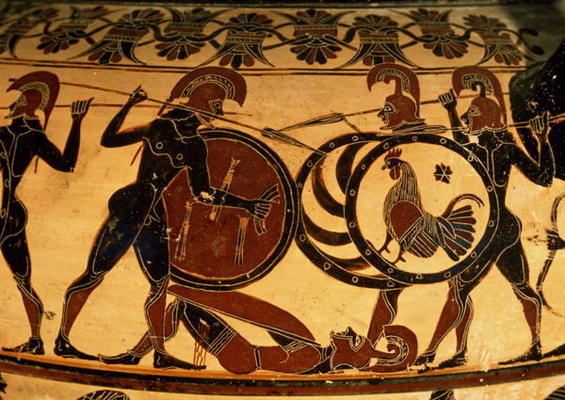
As the lower mangoes get fully harvested, they attach longer and longer bamboo shafts until they become top-heavy and unwieldy.  But my Senegalese brethren manage these sticks with the dexterity I’m sure a Greek hoplite would have (or a Macedonian phalangite.  I sometimes wonder if using these sticks to knock down mangoes wouldn’t be great spear training in days past.)

I've always loved black/red pottery

But the overall best part about mango season are moments like this.  In my village there are a lot of old men.  These old men just kind of sit around all day and talk and drink tea.  It is rare to see them move substantially, and even rarer to see them move rapidly.  So picture this, I’m sitting under a mango tree drinking tea and talking with a bunch of old men.  All of a sudden I hear a *crack* from the tree above as a mango comes tumbling down to the earth.  And like that, the old men look around at each other, and then jump up and sprint to where the mango has fallen, trying to get to it first.  And the first man who gets there lets out a joyous laugh of victory as if he’d won a marathon.  Seriously, those old men book it.  I’d never seen them run so fast as when trying to get to a mango first.  Of course, the most hilarious is when they all jump up trying to get the mango, only to get there just as a cow had arrived to eat it first.  Oh, the looks of incredulity.  Anyway, the point of this blog is that although the hot season is more or less unbearable, it still has its good parts, and seeing 70 year old men chasing after mangoes like school-children makes it all almost worth it.  Almost.

Some pictures:


Thursday, March 13, 2014

Tambacounda Half Marathon

In early December 2013 I found myself in a very nice Peace Corps car heading up to Tambacounda.  Why was I in this air-conditioned car, what was my purpose in Tambacounda, besides of course, seeing the amazing Tamba volunteers?  Because I was going to run in the Tambacounda half marathon.  Why did I run?  That is something I asked myself occasionally and was asked frequently.  I remember having many conversations with Katie Curtis about why the heck I was planning on running it.

“So you’re coming to Tamba to run in the race right?”
“Yup”
“And you’re still intending to run the half marathon?”
“Yup”
“You do realize that there is also a 5k and a 10k run.  You don’t even jog, I don’t want you to get heat exhaustion and die.  Just run the 10k.”
“Nah, Ima run the half”
“But why?”

And “why” is really the question.  I mean, why do we do what we do?  What drives people to climb Mount Everest or swim the English Channel?  Because it is there!  I wanted to set my mind to something, strive and dedicate myself to that purpose, and succeed.  I don’t know, I guess I was at the point in my service where I wanted to prove to myself that I could set a goal, no matter how unlikely it was, do my best to prepare myself, and then go out and achieve it.  Maybe if I succeeded in the half marathon I could translate that success to other areas I find myself deficient.

So I had a little over a month to train for this race.  I decided I would jog every day at an increasing distance until the week of the race.  So that's how I found myself in shorts, in my running shoes, walking through my village to the road that leads to Guingara.  Many heads were turned,

“Hey Hamady, what are you doing?”
 “I’m going to run.”
 “But why?”
 “Fii esport!!”

And I was off, jogging for the first time in God knows how long.  It was about 5 minutes into my jog when I realized, “I’ve made a terrible mistake”.

But I gritted my teeth and got through it for about a 45 minute jog.  I went to bed that night exhausted, but satisfied.  Jogging was actually a great activity.  Because I was jogging on the road to Guingara I met many people from that village that I didn’t know, and I was able to alternate routes to different villages and in that way met people from Thiobo, Santanko, Baratinguira, and Takouru as well.  The days I didn’t jog I was asked, “Hey Hamady, I didn’t see you jog today!”

 “Today was my day off!”.

I can’t say that I ran every day, but I tried my best.  For a week in November that I wanted to train I went out to Saraya to help with the end-season sweeps for PECADOM PLUS.  I wasn’t able to jog then, but I tried to ask to go to the more distant villages so I could get some exercise riding my bike.

So there I was, in the Peace Corps car heading to Tambacounda.  I had done the best I could to prepare myself for the half marathon, but I was definitely not yet ready.  I had never really jogged for more than an hour at a time before becoming exhausted and stopping.  I realized in the car “I can’t finish the half marathon, I just haven’t trained enough, but I can run the most I can before walking, maybe I can alternate between jogging and walking.” It would be a bit humiliating, but I would at least be able to strive for my goal.  The other option was to run the 10k.  This had been suggested to me many times, and I had been considering it if I didn't feel prepared for the half marathon.  I did not feel prepared for the half marathon.  I had no idea what I was going to do.

I arrived in Tambacounda where I met up with a lot of friends from my stage and from other stages who were there to run as well.  I was asked often,

“So I heard rumors you’re planning on running the half, I didn’t know you ran.”
“I don’t really.”
“So what are you going to do?”
“I still don’t know”.

That whole evening I was sitting there while hanging out with other volunteers, with that question in the back of my mind, what should I run?!  At around 9pm Miles came over and said that I really needed to register for one of the distances, and asked what was I going to run.  What was I going to run?  I still didn’t know, so I said, “Sign me up for whatever you think best.”  He walked off and came back a few minutes later,

 “Yeah, I signed you up for the half marathon.”

 Well, it looks like I’m running the half!

 How hard could it be?

The next morning I woke up at the unreasonable, ungodly hour of 6:30 because the race was to start at 7:00.  Or maybe it was earlier, I don’t remember.  I realized that I hadn't brought any socks.  By this point I was basically wearing flip flops everywhere I went, so though I remembered to bring shoes, I forgot socks!  I told this to Miles who was very concerned.  He suggested I could use his, but unfortunately they were his only pair.  So, through his generosity, I was fully geared for the race (and God bless him, Miles ran the 10k in shoes without socks).  Anyway, we were bused over to the starting line; there were about 13 of us.

In the hear of the city


The city was pretty empty so early in the morning and we were really the only ones out on the streets.  As we stretched and waited for the race to begin all of the other participants were talking about all the different half marathons they had run and what their favorite tracks were and things like that.  It was really nerve-racking, like, “yeah… I’ve never run a race before, let alone a half marathon, and these guys are like professionals.”

And then like that we were off, running through the streets of Tambacounda.  The race was about 11km along the road to Kedougou, and then 11k back.


It looks so far!


 I found a running partner in Adam and we just kind of hung out and talked while jogging.  The pack separated pretty quickly and we were basically at the very back of it.  We spent a lot of time talking about the various ways we would cripple those ahead of us when they were on the return leg of the race and we would pass each other.  Also, yelling at the people ahead of us for making us look bad and that there were girls watching. 

Seriously, I gotta look good

I managed to get to the turn-around while still feeling good, but then started to fade.  It was at this point that Adam decided to pick up the pace, to my chagrin.  He soon jogged past me and out of sight, but I came upon him 2k later.  He had injured himself was was being looked at by the medical staff who were there to make sure everyone stayed healthy during the run.  There may be a lesson to be learned from this.  At around the 15k mark I was kind of in agony, but there was only 7k more to go.  Those last 5k must have been the hardest in my life.  All of my muscles were screaming, and all of my tendons and ligaments were painfully tight.  At this point my jogging was less of running than like old man running.  You know how sometimes when you go out to the track early in the morning you will see old men jogging around?  They sort of have this weird shuffle thing.  I was old man shuffling.  I’m sure people were walking faster than I was jogging.

As I got back into the city of Tambacounda, which was now bustling as it was around 9 in the morning, I got a lot of quizzical looks from passer-bys and a lot of laughs.  I just zoned them out.  At one point the gendarmerie van passed by.  They drove real slow and shouted encouragement to me, “You can do it! You’re almost done, just a little bit more!”  It was actually really encouraging and nice of them to do, so, thank you Tambacounda gendarmerie!

I didn't bring anything to listen to while running, which I regretted, as music would definitely have been a good distraction.  There was, however, a sort of serenity in the quiet.  Thoughts would come and go, or would loop through my mind.  I passed the Tambacounda cemetery, which is cimetiere in French.  I knew that ciment was "cement" in French.  I wondered whether the word for cemetery in English came from the word for cement.  It would make sense in a way.  I don't know why, but this thought stuck in my mind for the last few kilometers of the run, and has stuck with me ever since.  I just had the chance to look it up, and it doesn't come from the word cement.  It comes from the Greek word for sleep.  Oh well!  With these thoughts running through my mind, I continued through the heart of Tambacounda.  It was probably best that no other volunteers saw, my running by that point was pretty pathetic. 

But I finished the race!  And I did it without ever stopping to walk.  It took me like 2 hours and 30 minutes or something, which isn’t actually very good, but I had achieved my goal of not walking.  I reached the finish line, high-fived people, milled around, and then took a seat and drank some ORS.  About 15 minutes later I thought I’d get up and get a bean sandwich… I could not get out of my chair.  Oh well, I guess I could rest a little bit more!

My smile betrays my exhaustion (Thumbs up Courtney!)

People began filtering out of the finishing line area, but there I remained, unable to leave that chair.  As my friends were leaving they asked if I was ready... I clearly wasn't.  They agreed to wait with me longer, and maybe 15 minutes after that I was ready to return to the Tambacounda regional house.  A large party was planned for that evening, but few were in the mood for it after being so exhausted.  As I sat in the regional house, Ouissam, the Peace Corps Medical Officer who was there to make sure that no one got injured, came over the check on me.  He suggested I take some paracetemol, the unequivocal go-to medicine in Senegal.  He said that he noticed that I hadn't gotten the flu shot for the season.

"Do you want the flu shot now?"
"...Sure"

So exhausted, I received the flu shot, and I barely felt it.

In conclusion, I am proud that I was able to set a goal and see it through.  I apparently am a bit of a Tamba half marathon legend.  When at WAIST I met someone from the new stage and they were like, “yeah, I saw you at the half marathon, you’re kind of a legend.” “Oh really?” “Yeah, you were the guy who showed up without like training at all and needed to borrow someone’s shoes and then you ran the whole thing.” “Well, I had trained a bit and it was socks I had to borrow, not shoes, but it’s good to know I have a reputation.”


And I haven’t run since.

There Be Rice In Them There Fields

I have always found rice interesting.  I don’t know why, but it really fascinates me.  Maybe it’s that it feeds more people than any other grain, providing around 1/5  of all calories consumed world wide [citation needed].  Perhaps it’s that I find the hillside terraces of rice patties extending throughout China to be beautiful.

Seriously, Peace Corps China!

Whatever the reason, I never expected to be a rice farmer.  Yet another thing to cross off the list.  At my site we grow corn, peanuts, and rice.  Corn is the crop we depend on the most, but I think that rice is the most interesting to harvest.  Unfortunately I wasn’t around for rice planting, but I was able to help my family with rice harvest.

Unlike our corn and our peanut fields, which are in the center of our village, the rice fields are further out, maybe 2 kilometers, in the surrounding plains.  I’m not sure if you recall my earlier post about God flooding the fields, but during the rainy season these low plains flood completely, turning my village into an island in a sea of swamp.  This can make life difficult, as getting to and from site is a hassle, and that is an understatement.  I’m sure I’ll write a blog post later about the difficulties of living in a swamp and just how thoroughly depressing it is to ride through mud and water for hours. 

But on a lighter note, back to rice!  Seriously, I think rice is awesome.  We eat rice almost every day here, to the point where other peace corps volunteers swear that once they return to America they will never eat rice again.  I am not of that mindset.  I still love rice and intend to eat it often back in America.  So once the rainy season ends and the fields drain, it is harvest time for rice.  Of all the crops we grow, we harvest rice last.  First we harvest the corn, then the peanuts, and then rice last.  Basically, in order to harvest the rice people in my village go out into the fields (called paraji in pular) with hand sickles.

not as much fun as you'd think

It is very labor intensive as you have to be constantly bent over, using one hand to grab the rice stocks, and the other to cut them with the sickle.  I was at it for about an hour before I had to take a very long break.  I do not envy the life of a rice farmer.

So after cutting the rice stocks you make them into bundles and then tie them up.  When all of the rice has been harvested, then we “lappugol maaro”.  This literally means “to beat rice”.  Apparently there is an English word for it: threshing.  This is the process of removing the rice grain from the shaft.  It’s interesting how many English words that have fallen out of use because they are agrarian in nature.  I am learning a lot about the English language by comparing it with the agricultural techniques I have learned here.  But seriously, what does it mean to “till”? Apparently “ussugol” in pular means to till, but I don’t know what that really means!  Oh well. 

As I was saying, after we cut all the stocks we go about threshing them.  As I have mentioned, it is literally translated to “beating rice” so you might be asking.  But Chris! Howsoever do you thresh rice?!  I’m glad you asked.  You beat it with a stick.  Like, a really big stick.  The sticks are usually a bit taller than I am, and about the thickness of a baseball bat.

So in Pular villages there are village work days called “kile”s, when basically everyone gathers in someone’s field to help them harvest.  In reciprocity the person who is hosting the kile cooks lunch for all of the workers.  It is a good way to score a pretty good lunch.

 So in the rice threshing kiles you basically grab a few of the bundles and put them in a pile.  After this everyone who is there to help forms a circle around this pile.  We then start just wailing on the rice pile.  Apparently this creates enough force to remove the grains from the stock. 
It is quite an exercise, but can be pretty fun.  The best part of it though is the solidarity that it breeds.  To be there as one of the community, beating rice, it’s like “I’ve made it! I’m finally integrated” and you are basically one of them. 

So there I was, hitting rice with a stick, when all of a sudden one of the men there said to me “Attend! Ensemble!” Which means “wait, together!”  We then synced up out strokes so that we hit the rice at the same time.  He then started chanting along with the beat to help us keep time.  As this is going on another person shouts out “Tournez! Which means “turn!”  So now after every strike of the rice we rotate counterclockwise.  So there I was, hitting rice in time with a man chanting and singing while turning around in a circle.  I felt like I was an old fashioned sailor on a ship singing sea shanties to keep the time while heaving to (“heaving to” is a nautical term, right Ellington?  I’ve been trying to read that sailing boat you gave me).
 
4 dudes in a dhingy


It was truly a magical moment, just being a part of a community, hitting out the beat together, helping make a living.  I went to bed that night very tired, but extremely content.

Bandafassi, Benoit, Bediks, Bannje, Beliefs

I thought I would talk to you all a bit about my day in Bandafassi with Benoit (I thought that his name was Benoir, which is the French word for a big pastic tub, which is awesome, then a friend apologetically told me otherwise, I was devastated).  Thanks a lot Jason, took a little bit of magic out of my life.  Anyway, it was one of those pleasant days when you have no real expectations, but are then pleasantly surprised.  So let me begin:

I was planning on going into Kedougou from my site for one reason or another.  Usually when I ride back to village from Kedougou I go through Bandafassi in order to hang out with friends I have there and see my Tokara (my name sake).  Because of this, usually when I go to Kedougou from site I take the straight road that cuts through the bush all the way.  But this time I had promised my friends in Bandafassi that I would pass through it the next time I rode back to Kedougou.  Usually when it’s time to go to the regional house I am out of steam and looking forward to hanging out with Americans and using things that require electricity and eating meat, so spending a day at another village on the way there can seem unappealing.  But I hadn’t been around for a while, so I thought it would be nice.  Now, my friends attend the school there, so they aren’t available until around 3:00.  I didn’t feel like milling around my village, so I thought I would ride in early and spend some time at the campement there, “the bedik”.   It’s a nice little campement with about 10 rooms and a small lounging area.  They sell cold drinks there and aren’t usually very busy, so I thought I would just drink a cold sprite and get to know the owner better.  She is a nice Bedik woman, I embarrassingly can’t remember her name, but I have only stopped by once or twice so I didn’t (and still don’t) know her very well.  She would be a good person to know, so I got to Bandafassi early and headed on over to the Bedik.

Hello Bandafassi

When I arrived there I put my bike down and walked into the little restaurant/sitting room/shade structure.  It’s a quaint little building with a small bar and a few tables with chairs around them.  I decided to put my backpack down and sit at one of the tables.  No one was there.  Hmm, what to do now?  I guess I could just go over to my friend’s house and hang out with the old people there.  As I was considering these things I see a man walk up.  He introduces himself as Benoit and says that his sister, the manager, is away at Dakar and while she is away he is in charge.  We start talking in Pular a little bit, I tell him I live in Nianghe, but am from America.  At this point he says that he actually speaks English, which is great because that means that we can have a real conversation. 

He told me that he is a Bedik man, and I thought this was a great opportunity to learn more about the Bediks in English.  So I ask him some pretty basic questions about life growing up in a Bedik village.  I was very interested in learning about the initiation ceremonies.  He said that they are not at any set date, but can be thrown at any time a boy is deemed worthy to become a man.  This could be at any age.  How does he prove this worth?  Apparently he has to demonstrate the ability to conduct himself as a man and his dedication to the village.  The example he gave was being able to carry a certain amount of wood up the mountain to the village, or to carry water or palm wine that same distance.

this hill

 Once everyone agrees that you have the qualifications of a man, they then throw the ceremony.  As an initiated man, to contribute to the village you have to carry logs of wood up the mountain every Thursday.  Along with this, you are granted access to one of the two secret houses on top of the mountain.  What is in the secret house?  I don’t know… it’s a secret.  After having been initiated for 5 years, you are then granted access to the second secret house.  Apparently it’s cooler or something because it’s even more secret than the first secret house.  Having access to this 2nd secret house also makes you eligible for marriage.  This means that you aren’t supposed to marry until you have been initiated for at least 5 years.

At this point I ask him about his views on alcohol.  I forgot to mention, he is a university educated man, majoring in film making.  I’ve noticed a sharp difference in views of university educated men and those who have not received an education.  Thus I asked his opinion of his own culture as someone who has been far enough away from it to view it with a more objective eye.  Since drinking alcohol is a big part of Bedik culture, I wanted to know what he thought of it.  He said that Bediks have to go further and further to get palm wine.  Apparently Bediks and Bassaris harvest palm wine in different ways, and the Bedik way can kill the tree.  For this reason they have to go further and further to get their palm wine.  Benoit said how when he was young he would have to carry a 20 litre barrel for kilometers in order to bring back the palm wine.  Now people bike and motorcycle theirs back.  He jokingly said that pretty soon they would need to bring out helicopters in order to bring the palm wine back.  So I asked him if he himself drank alcohol.  He said, “oh yeah, of course I do, it’s part of being a Bedik… I actually have some palm wine right here.  The first day I got back I bought some to share with people.  Let’s drink it! It makes no sense to drink alone, I can always get more.”  He was very gracious so I agreed. I just sat back, sipped on some palm wine, which is called bannje in Pular, and learned some more about Bedik culture and religion.

At this point the conversation switched to religion.  I want again to say that this blog is my own personal views and that what I am about to describe is my impressions from what I heard, I don’t claim to be an expert on Bedik religious practices and could have totally misheard and misinterpreted what I was being told.  Anyway, so apparently in Bedik religion there are many gods and spirits.  One of their more important gods is the sky god.  But since the sky god is so big and so far away, it is difficult for your prayers to reach him.  Because of this it is helpful to have a benevolent spirit amplify your prayers.  To attract these spirits you create little stone shrines.  You build up a mound of stones and place a piece of iron in the middle.  This attracts the spirits called “Jaluns”.  After this shrine is built, if you see a stone or rock moving by itself, not being propelled by any force, that means that a Jalun lives within it.  You can bring this stone back with you to your hut and put it in the corner overnight (but what if your hut is a circle and thus has no corners?!?!).  Anyway, you put the stone in your hut and place three items in front of it: a feather, a small pile of millet, and human hair.  The next morning you check the Jalun and whatever is missing is what the Jalun demands of you.  So if the feather is gone, that means every time you pray you need to have a chicken with you to please the Jalun, and then the Jalun will help your prayers reach the sky.  If the millet is missing that means you must bring millet beer when you pray.  If the human hair is missing, that means that for your prayers to reach the sky you must sacrifice a human.  This means that the Jalun is actually an evil spirit and in order to protect yourself and your village from catastrophe you must expel the stone from your hut and from your village.

All in all it was a very pleasant experience.

  It was one of those pleasant chance meeting that you weren’t expecting, but because of that make them more enjoyable.  I spent a great afternoon, drinking palm wine, speaking English, and learning and the Bedik culture.  He said he would love to practice his English as there aren’t many people in Bandafassi who speak English, and I said I wanted to learn more Bedik, so the next time I am in Bandafassi I’ll make sure to stop by for a bit of language exchange.  And who knows, maybe I can get some more palm wine!

Monday, March 10, 2014

Na'i din yakay hudo suudu an!

The Rainy Season is over!  Also, the cold dry season is over too.  Darn.  That means that it is the hot dry season.  Prepare to sweat, it’s gonna get hot in here.  But shifting away from the rainy season, we no longer are growing any field crops.  The women in my village actually started a beautiful garden near the well in my village.  It was all their initiative, they secured the funds, and they water it multiple times a day.

do you have to grow jaxatu though?!

But I’m not going to talk about that now.  Do you know what I’m going to talk about?  Cows.  That’s right, it’s another cow blog post!!!! 

As I’m sure you’re acutely aware, I am a cattle herder/sometimes farmer.  But though we grow corn, rice, and peanuts, our cows are our most important asset in village.  We even give them names!!!  I am ashamed to say that I haven’t spent enough time with them lately and can’t even distinguish Ibrahima from Mamadou.  During the rainy season every morning we would wake up, untie the cows, and then shoo them off into the bush.  Someone would go and look after them the whole time until evening , when we would herd them back to the cow field to tie them up to stakes we drill into the ground (or fallen trees or bushes or whatever is free standing).  Apparently it’s called a “wouro” in Pular, but I’m not sure if the name fits because I always assumed that wouro’s were enclosed with a fence.  Nah, we just tie them up to logs and stuff.  We also move this cow camp throughout the rainy season.  We continue this process from when we first plant all the way until rice is harvested (June-December).

But that season is over!  It’s kind of bittersweet because now I don’t have to tie up and untie the cows every day, but I also don’t get to, it can be pretty fun.  So what do the cows do these days?!  I don’t really know.  We shoo them off into the bush and they just kind of wander around until the next rainy season when we spend a day adventuring through the woods looking for our wayward cows.  So I rarely see our cows these days. 

  I actually heard a story from RPCV Cameron related to this (sorry if I butcher it).  So Cameron was hanging out with his rather elderly father one day.  All of a sudden his father jumps to his feet in surprise.  Now, this is an old man, the kind that doesn’t move very fast, but he jumped to attention.  He exclaimed, “that’s my cow!!!”  To Cameron’s confused look he added “last rainy season he didn’t come back, but he came back this year!”  He was very excited.  The moral of the story is that this particular cow spent two years living out in the bush before just deciding to wander on back home.

So there aren’t many cows around, but you still see a few.  They come in and out of the village as they please, so you see them around.  But since they have free range it leads to a particular problem.  “Na’I din yakay hudo suudu an! (The cows eat my roof thatch!)"  Some mornings I’ll wake up at the incredibly unreasonable hour of 6am.  And what wakes me up at this god-forsaken hour?  The slow chomp and rustling of the thatch on my roofs.  That’s right, the cows will walk up to your roof thatch and start eating it.  Dude, cow, what’s up?  Can’t you see that this is the only thing keeping rain out of my hut in the rainy season?  It already leaks enough!  Then you’ll have to get up out of bed, unlock the door, walk outside, and give them a thorough “ATCHA!!!-ing”  Then when I eat breakfast in the morning my host mom will say “hey, I saw you this morning.  Cows eating your roof thatch huh?  Yeah, that happens.”  But in her defense if she ever actually sees the cows eating my thatch she will run over and try to ACHA them.  I mean, cows eating my thatch doesn’t happen often, but it still does, and when it does it sucks. 

It does lead to a fun greeting though, “Est-ce que na’i din yakaali hudo suudu maa? (have the cows not eaten your roof thatch?)” 


Village life can be peculiar.  Let this sink in: cows are trying to slowly eat my house.