Sunday, February 23, 2014

Another day in Limbo

The last blog post I wrote was almost half a year ago, how time flies when you’re at village drinking tea and living as a subsistence level farmer.  As I recall the sentiments of that most recent blog post regarded another day in limbo.  It is interesting that although so much time has passed and I’ve gained so many more experiences; whether touching, anxious, absurd, enjoyable, depressing, than I possibly have in my lifetime leading up to this, the sentiments I feel now are the same as that last blog post.  Whereas in that post my limbo was geographic and temporal, not being able to get back to site, this current limbo I find myself in is more… psychological?  No that’s not the right word, it makes me seem a bit crazy.  Emotional?  That’s closer to the mark I suppose, but doesn’t capture the whole picture.  The fact of the matter is that whereas before I was physically unable to get back to site, at this point in time, I don’t feel like I am ready to go back.  A little bit of context is necessary, so I guess I’ll fill you in.  I’m not talking about all the details from my last blog post to this one.  I am sorry that it has taken this long, and I hope in due time to write more blog posts relating to the past few months (I have about 20 ideas, I just need to write them).  For this post, it would be best to go about 3 weeks ago.

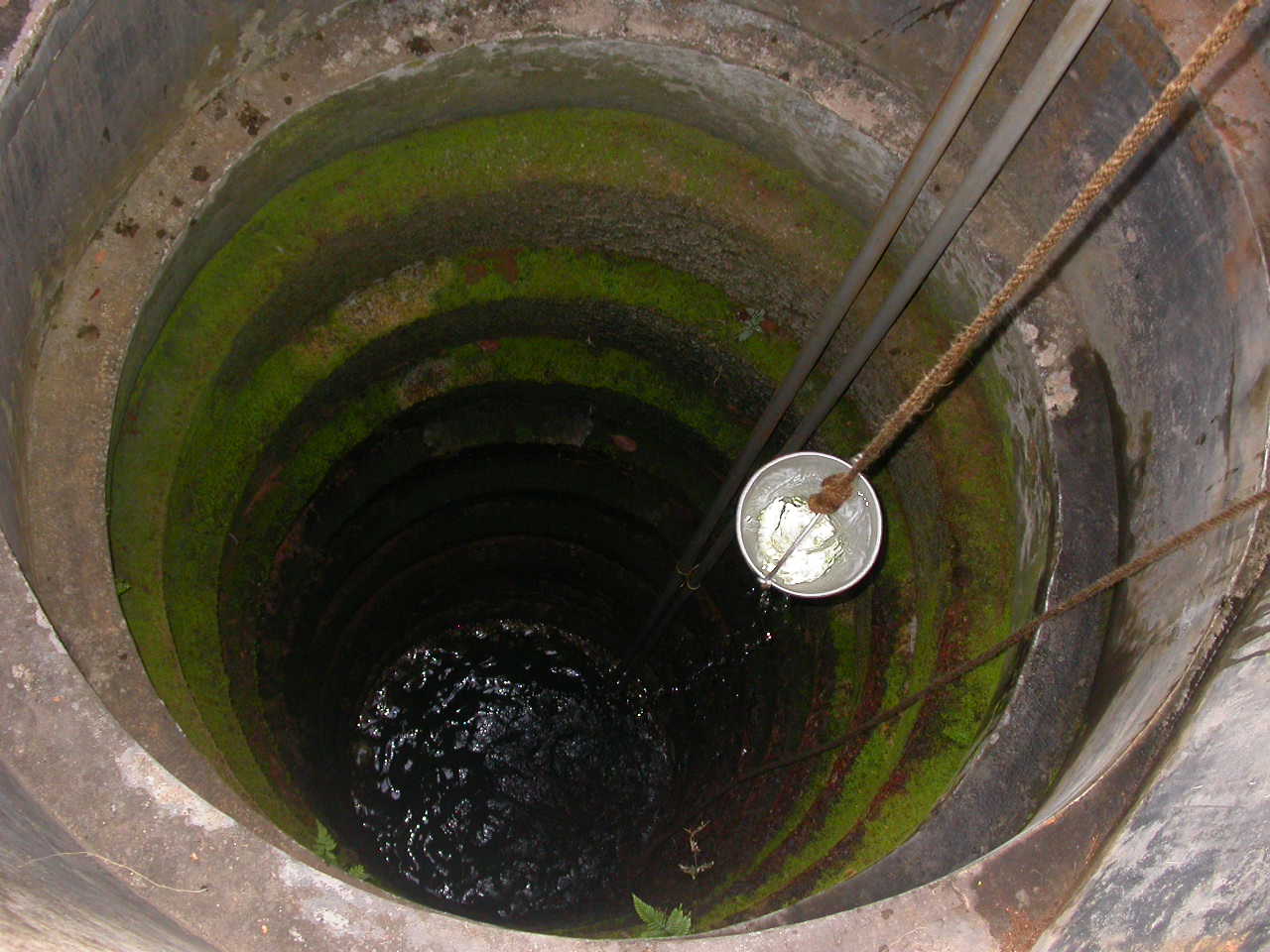
It started about three weeks ago when we were trying to pick a replacement for Tommy Zoppa as work-zone coordinator in the Kedougou-Bandafassi workzone (affectionately named the “man zone” because it used to be 10 guys, but since Anna installed it is 9 guys and 1 girl… thanks for ruining the ratio Anna [just kidding]).  Basically in Peace Corps Senegal we are broken up geographically into work zones to facilitate cross sectoral synergy and all that jazz,  the coordinators are supposed to help facilitate this collaboration.  It really boiled down to two candidates: me and Anna.  We had a really awesome idea of choosing who would be selected.   Originally I had suggested a JRR Tolkien trivia-off (I have actually apparently been challenged by John Kelly recently to a trivia-off, but that’s neither here nor there).  This plan was amended though to a good ol’ fashioned LARP.  For those of you who don’t know, LARP stands for Live Action Role Play.  Basically we were going to dress up as hobbits and the rest of the workzone would dress up as nazgul.  The challenge would be to get from the gate of the regional house to the well in the back (dubbed mount doom [or amon amarth for all you Tolkien fans]).

Cast it in the fire!!! Er.. water?

 There were going to be side quests too like having to go to Jubal’s hut and endure an hour of his terrible puns, the reward being him following you around as your traveling minstrel. 

the puns are so bad!

In case Peace Corps staff (Hi Chris Hedrick!) are reading this, that is not actually how it all panned out (unfortunately).  We never had our LARP (yet!) and instead voted and decided that since I’d be the sole health volunteer in the workzone after the current health stage COSes, it would be best for me to be a co-coordinator to bring a health perspective to things.  Much more logical and professional, if less fun.  The fact remained though, I would have to go up to Thies a few days early in order to attend the work zone coordinator training.  This meant that I had quite a bit on my slate for February.  First work zone coordinator meeting, then the all volunteer conference, then WAIST (I’ll get into what WAIST is soon).  All in all, it would be a little over 2 weeks in Thies and Dakar.  2 weeks with fellow Americans, speaking English, a social scene, seeing old friends and meeting new ones.   What a daunting thought!
 
Seriously though aaron, what's that facial expression?

For the sake of brevity I thought that I would just free-flow thought the highlights of work zone training and all-vol.  It was truly great seeing my friends from all around the country again.  I found them more mature, responsible, and worldly than I had last seen them.  Would it be an overstep to say that with this experience, I could detect a sense of jadedness?  It is a sore subject for peace corps volunteers, but I find that it is a slippery slope from maturity and worldliness to jadedness.  It’s something we have to combat every day, and I am assured that my friends are winning the fight.
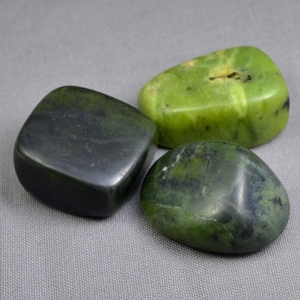
jade is such a beautiful gem to be used to describe bitterness and lack of caring

We got to go to Palais-des-Artes once, which is always a pleasure.  It’s basically a dance club really close to the training center in Thies.  Oddly, it doesn’t really get bumping until about 2am.  We got there at around 11 and used our own ipod to play some American music and had a good dance party.  Lot’s of fun, I showed everyone up with my running man [citation needed].   Of course, there were many a good night just hanging out at the bar.  I mention these things to highlight the social aspect of my time in Thies.  It is easy to fall back into old mindsets of comfort and hanging out with friends.  This is a part contributing to the limbo I am currently in.

The work zone coordinator training and all volunteer conference weren’t just us hanging out the whole time.  They were full days of training wherein I learned much about what it means to be a workzone coordinator and how I can contribute to the overall goals of Peace Corps Senegal, and the Peace Corps at large.  Furthermore, all-volunteer conference was an amazing experience.  Presenters from all over the country talked about the projects they had done and gave advise on how to implement them in our own sites.  I learned about malaria, gold mining, mango grafting, solar drying of fruits, rice propagation, cashew marketing, water retention and earthworks, etc.  I even got to go on a fieldtrip to a farmer’s field where they had implemented berms, stop dams, and other modes of water control.  It was a great experience.  As the only health volunteer there, it was like having a panel of agriculture volunteers just to answer my questions and give advice.  The whole event was truly inspiring and gave me energy and imagination to tackle problems in my own village.

And then there was WAIST.  If you have seen my facebook profile lately, you’re bound to have seen me dressed up in a full suit, probably doing ridiculous things (and looking good doing it!). 

This picture basically summarizes my WAIST

 Although there needs be no reason to look this drop-dead amazing, this specific occasion was because of WAIST.  WAIST stands for West Africa Invitational(?) Softball Tournament.  You might be asking yourself, why softball?
  
Why not?

  So basically it’s an event for expats in Dakar: embassy people, NGOs, and of course, Peace Corps.  The Peace Corps contingent has a history of being a bit… rowdy, so we play in our own league.  We are split up on teams by region, and each team comes dressed in a costume.  It’s like a softball costume party where no one really cares about winning softball, but having a good time, maybe drinking a little bit, and looking ridiculous in costumes.  This year team Kedougou decided to dress up as Team Zissou.  Don’t understand the reference?  Well neither did I (or like over half of the other people there).  Apparently it’s from the Wes Anderson movie “The Life Aquatic”.  So in the movie they all dress up in light blue jump suits with red beanies. 
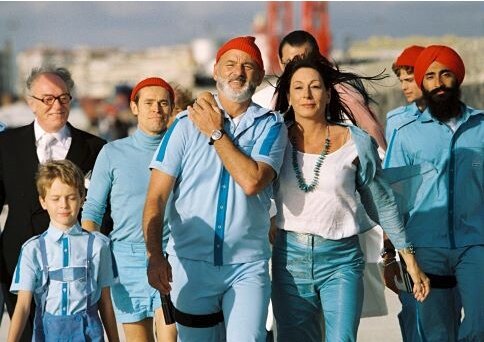
something like that

 I decided to lend my own flair, and after watching the movie I noticed that the opening scene started at a formal movie screening where they were all in full suits with their characteristic red hats.  That sounds like fun, right?  Playing softball in a full suit, bow tie and all?  Well the answer is “Heck Yes!”  Sure, it was a bit difficult to run around catching softballs and batting in a full suit, but I still had a great time.

There were other events surrounding the softball like a masquerade thrown by the marines at the embassy, a bar trivia night and bowling night.  Though there were a few hiccups, I had an overall enjoyable time.

Which brings me to where I am now.  I’ve spent over 2 weeks surrounded by good friends, being social, speaking English, and having an just hanging out.  I’m just in a state of mind where I’m not ready to go back to village.  I mean, village is great, and I love it there.  I truly do.  But I’ve just been in this mindset of living fast and social, it is truly daunting to try to go back to village life which is markedly slow and difficult to get across complex emotions or personality in general due to language barriers.  So here I am, sitting at the Bedik Campement, looking over the diminishing Gambia River, wondering.  It won’t be until the 4th of July before I see most of these people again.  Did I leave off on a bad foot?  Were there things that I’d left unsaid?  I won’t have a chance to be in a similar situation for another 5 months.  The Peace Corps is a weird social environment.  We are stranded in our villages for months at a time, and then all of a sudden we’re all back together again for a short time span of maybe a week, and you need to fit months of social interaction into that span of time.  And if there are things you regretted doing, or not doing, you only have months of doing nothing to look forward to.  Of course, you have your village to talk to, and your work to keep you occupied.  But even with all of this, there is still so much time.  Time to think, and god forbid, even to brood.

Bediks

I live in one of the most remote regions in Senegal.  It takes forever to get anywhere since we are so far away.  Mail takes forever to get to us because it has to wait in Tambacounda until the car fills and can come down to Kedougou.  Stock outs are common as the supply chains to Kedougou from Dakar are stretched thin so often there is no medicine when it is needed most.  There are many drawbacks to living this remote, but there are also perks.  Life, to say the least, is not boring here.  We have elevations, rolling hills coming to apexes with beautiful rocky cliffs and formations like out of a fairy tale. 

King of the World!

We have waterfalls cascading from the Guinean steppe above us that girdles our Southern border like a ringing wall.

 dindefello waterfall, thats right, we have water

But of a different interest, we have fascinating people groups to call family, and to call neighbor.  I, of course, live in a Pular family, in a Pular village (though there are a few malinkes, jolonkes, and bediks amongst us).  Many other volunteers in Kedougou live with Mande families, both Jaxanke and Malinke (Kor Tanante?).  They have an interesting musical tradition, mostly centered around griots, who are like village story-tellers and musicians, who are adept with the Kora.

I've had the chance to play one, they're quite difficult

But this blog post isn’t about my experience with any of these groups, it is about the Bediks.  Specifically the Bediks in my area.

My neck of the woods

As you can see, I, though not in the heart of, am in Bedik territory.  My village is Pular, but there are at least 3 Bedik villages within 3km to the west of me.  This puts me in a unique situation, being the only volunteer near the Bedik people.  So let’s talk about Bediks a little.  They are an ethnic group closely related to the Bassaris, Coniaguis, and the Badiarankhes, together in an umbrella branch of the “Tenda people”.  Thus the Bedik language, like the Bassari language, is a member of the Tenda branch of the senegambian languages (with other branches including Wolof, Serer, and Pular).  They are one of the smallest micro-ethnicities in Senegal, having only around 3,500 people according to the latest census.  There are only 3,500 Bediks in the entire world.  It is quite sad as their distinctive culture is slowly dissolving under the pressures of globalization and modernization, but that is a topic for another post.  This post is about my experience with them.

What makes them most interesting, as someone who lives right next to them, is that they drink.  By that I mean they drink alcohol.  In Islam it is strictly forbidden to drink alcohol, just as it is strictly forbidden to eat pig.  For this reason, you will never see a Wolof, or Pular, or Malinke, drinking alcohol.  Well, some do, but it’s rare and they’re generally looked on with disregard.  So being in village and drinking alcohol is an extremely peculiar circumstance for a peace corps volunteer, since Senegal is so predominantly Muslim.  But the Bediks drink.  And why do they?  Because they are animists.  They’re also nominally Christian, but not strongly so.  Let me once again elaborate that these are my views alone and do not reflect the opinions or beliefs of the Unites States Peace Corps or the government of the United States of America.  I’m sorry I had to do that, but these kind of discussions can get a bit sticky. 

The Bediks have an odd syncretism of animism and Christianity.  Some go to church on Sundays, but then they go and pray to their nature spirits, called Jaluns, and the sky god and weather gods to protect their crops.  Though these beliefs seem mutually exclusive, they make it work.

So it’s anecdote time!  Like I said, there are 3 Bedik villages with 3 kilometers west of me.  The interesting situation I am in is that my village is at a road nexus between these villages and the river.  The river is where the palm trees grow, which they make into palm wine (and drink profusely while doing so).  I forgot to mention, what they drink mainly is palm wine, a drink fermented from the fruits of the palm tree.  In order to get them they have to climb to the top of the tree on a latter and make gashes in it for the sap to pour out, which then ferments.  I really like it, but some people say that it takes a while to get used to.  It tastes very fermented, like the kossan “yogurt” that I eat.  It’s also very cheap, 200 CFA for a litre, which is about 40 cents. 

Tasty

As I was saying, my road is on the nexus between the Bedik villages and the river, so all three of the villages have to pass through my village in order to get to the palm wine.  Also, like I said, they drink while doing it.  This means that almost every day I will be sitting with my family, or a compound of a friend, when all of a sudden I’ll hear a commotion and yelling in the distance.  People will look up and say “Ko Tendabe, Tendabe ari”.  Which means “It’s the Bediks’ the Bediks are coming”.  And then a roving band of drunk Bediks will stroll into the compound and make a bit of a raucous.  You would think being in an exclusively Muslim village there would be tension, but it isn’t so.  My village thinks that it’s hilarious and have a good time laughing and talking with the clearly inebriated neighboring villagers.  It really is a testament to the good nature of the Senegalese people.  We hear on the news about Muslims as being violent people who cannot coexist with “infidel neighbors”, but that is clearly not the case here.  They coexist, the people in my village often watch Bedik ceremonies and celebrations with fascination and enjoyment.  So when a drunk band of Bediks stroll through, it’s all in good nature.  People also sometimes play innocent jokes on them, like repeatedly calling them back saying that they had forgotten something, like their cellphone.

Of course, sometimes they just won’t catch the hint that it’s time to go back to their village.  Like with any drunk people, eventually you just want them to go back and go to sleep, but they just seem to linger incessantly and not take a hint.  Then they’ll finally begin to wander out of the compound to go back to their village and you’ll hear a little sigh of relief from my family, but then the person will turn around, stroll on back, and keep talking.  It truly is an experience to behold, and one I’m sure not many other Peace Corps volunteers in Senegal experience.

Another anecdote!  One time I was sitting at Tamba’s house, just drinking ataaya in the dark (everything is done in the dark at night because, you know, no electricity), when all of a sudden a Bedik walks straight up to me.  And I mean, I could smell the alcohol on his breath.  He doesn’t ask who I am or why I’m here, he just says, “You’re White”
“Yes, I am”
“So you’re Christian then?”
“Yeah”
“Then you drink!”
“From time to time…”
“Well, I’ve got a liter of palm wine here, let’s drink it!”
Now, I’m in a Muslim village, and I don’t want to lose credibility, so…
“Nah, that’s ok, maybe next time, I don’t drink in village”
“Then come back to my village and we’ll drink!”
It was inviting, but “dude, it’s the middle of the night, I’m not coming to your village”
“Then come in the light!”
And like that the conversation was over.  I sat there perplexed as he walked away and my friends gently laughed at the whole conversation and the absurdity of it.

All of this has led to awkward conversations with my family and my counterpart about alcohol consumption.  Of course I drink, but it would be awkward to talk about it with my family and admit just how much I drink.  So they’ll say things like “did you see the drunk bediks last night?”  “Yeah, it was pretty funny”.  “So… do you drink?”  It’s a difficult situation to navigate.  I usually say that I do, but not often.  And then we go into discussions about the different strengths of alcohol.  My counterparts brother will say things like “what about gin? Do you drink gin?”
 “I suppose, but not a lot”.  
“Is it stronger than beer?”
“very”

So anyway, that’s been my experience with Bediks during palm wine season.  I live far away in the middle of nowhere, but at least life is interesting.

Mangroves

For this post I’ll have to reach way back into the recesses of my mind to recall the details of it.  For this reason, I apologize if it is scatter-brained or vague.  Like I said, my memory will bring me back to the early days in September 2013, what, almost half a year ago.  The topic of this post will be the mangrove replanting program that took place in Toubacouta, Fatick.  Of course, if you want a lengthy and technical explanation of the program, I’m sure that it could be found on the Peace Corps Senegal website or other publications.  As such, I will not go into much detail about the program itself, but my experience with it.  And the context of my experience begins a bit before the mangroves themselves, at a magical time called IST and a magical place called Thies.

It seems apt to write about IST now, when the new agriculture stage is currently in their in service training, but mine was in mid august 2013.  After about 3 months at site, we, the health stage, all came together for two weeks of more technical training.  I had a great time seeing everyone again and getting a true feel for what it meant to be a health volunteer in Senegal.  Of course, there are some pretty ridiculous stories from that time, some of which would be best not to get into.  I remember walking through dense rain at 4am trying to get to the phoenix nightclub, dancing up a storm at palais-des-artes, other palais-des-artes related stories.  Anyway, rest assured that it was an amazing time.

And all too soon, it was over, but there was still a good week or so before the Toubacouta mangrove replanting.  So what do you do with less time to go back to site, but more time than just waiting in Thies?  Popenguine!!!  I’m not sure if I’ve talked about Popenguine before, but it’s a beach resort town south in Dakar on the Petit-Cote. 

 The life of a Peace Corps volunteer

Anyway, Popenguine was amazing and a great way to blow off some steam after two long weeks of intense training.  We were at Popenguine for three evenings, which was great, but exhausting in its own way.
And then came mangroves.  As I hope to have shown, we had spent about 3 weeks of trainings and social scenes, and most everyone was just plain spent.  There wasn’t much excitement for the mangrove replanting.  Of course, I was full of energy, but a different type of energy, one that storms within, in secret.  So we were getting an alham, basically a mini bus, to take us to Toubacouta, and that’s where it all went wrong.
We call them alhams because they usually have alhamdoulilah written on the front

  First off, to Miles’ credit, he took charge of talking to the driver and trying to give him a sense of where we were going.  Unfortunately, none of us really knew how to get to Toubacouta.  So Miles kept saying “Toubacouta, en Fatick, Toubacouta Fatick!!!” And the driver just gave a blank look them occasionally would say “Fatick?!” “Yes, Toubacouta, Fatick!” Let me explain, Fatick is the name of the region we were going to, and we wanted to go to the city of Toubacouta in that region.  Of course, Fatick is the name of a city too.  Eventually after saying "Toubacouta, Fatick!" much more than was needed, he just nodded and we were off.  So after a few hours, lo and behold, we were in the city of Fatick.  We had another confusing conversation with the driver…. Yeah, he didn’t know how to get to Toubacouta.

So we had to transfer cars, get a new driver, and go on our bumpy way.  Along the way we had to wait for over an hour for the ferry we weren’t expecting.  Though the scenery was beautiful, most people were just frustrated.
Lots of water


It was really was a lovely ferry

We finally make it across the ferry as night descends, and oh wait, it starts raining.  The driver has to get out and put a tarp over our baggage, but it has holes and the roof has holes so we’re now having water streaming through the roof onto us.  Ok, I can deal with that, when BAM!  We feel a jerk, sparks erupt everywhere, and we swerve to a stop.  Apparently the axle fell off or something, I don’t know.  All I know is we had to wait around for the mechanic to come.  The stars were brilliant, reflected off the flooded plains below us, but this was lost on us as we were just wanting to get to our destination.  Oh, and at some point an old Pular man without pants came over and started talking to us.  In his defense, he was wearing a grand bou-bou that went down to his knees, but after a while we realized that he indeed had no pants on under that.

The mechanic came with a new car and we eventually stumbled our way into Toubacouta.

The moral of this story?  Just roll with the punches dudes.  People were getting really upset, and I understand, and people still look back with anger to the whole trip, but I had a great time.  We got to cross an amazing river delta at sunset, and see one of the more beautiful parts of the country.  It was really a bonding experience and I wouldn’t have given it up for 1,000,000 CFA.
So now to the mangroves themselves.  I’m not sure if you know what mangroves are, if not, look it up on Wikipedia. 

  http://en.wikipedia.org/wiki/Mangrove

Anyway, mangrove deforestation is a big problem in this region of Senegal.  People cut them down because it gives easy access to the oysters that attach to the roots.  Also, I hear it makes great firewood and great wood for boats.  Whatever the reason, Senegal is losing much of its wild mangroves.  The point of this activity was to go to a place that had recently been deforested, and plant new mangroves.  It seems simple enough.  So we got in a boat, rode out to the middle of nowhere, and started to plant before the tide came in.  It is really quite amazing. 

Hard day's work planting mangroves

  When you get there at low tide there’s this giant dry sand basin, but as the tide rolls in eventually it all gets flooded to the point where no land is showing.  It was spectacular planting these plants in the ground and see them slowly get submerged by the rising tide.  When we were almost done there were still a few bags full of mangrove seeds.  Since we had covered all the land we intended to, we decided to just take handfuls and throw them into the wind!  Let fate chose where they will end up!

I had a great time doing it, though I was in a bit of a funk for personal reasons.  So yeah, that’s an activity in Senegal working to reestablish ecological diversity.  Also, mangroves sequester salt, so its good to keep the trees around.

An unrelated story: when we first got there we had the rest of the day free.  I thought I’d go swimming or kayaking, but when I looked down at my ankle there was a giant blister on it.  We weren’t sure if it was a blister beetle or something else, that ankle had been submerged, who knows what lurks in the shallows?  Anyway, I was in a predicament.  Do I leave it be or pop it?  To leave it be would be the better idea, but it was in a place that could rub against my sandal, or catch a rock in the mangroves.  As such, it would probably burst at some point regardless, and it would be better to just lance it now in a controlled environment.  I have never had a blister lanced, and I assumed it would be excruciatingly painful.  As such, I thought I’d take a page out of the ol’ British sailor’s book and use alcohol as an anesthetic.  So I took a shot of whiskey.  I still felt queasy about the thought of lancing it, so I took another.  After 2 more shots, I felt ready.  We all gathered around in anticipation, but it was really anticlimactic.  It just kind of slowly drained, and I didn’t really feel a thing.  Great, so I didn’t have to take those shots of whiskey after all.  But after 4 shots of whiskey in fear of pain, I was actually pretty drunk.  So there I was at 2pm, pretty intoxicated while everyone was sober around me.  Good times man, good times.

Struck by Lightning?

Have you ever played the game never have I ever?  It’s generally a drinking game where someone claims that they have never done something, and anyone who has done it has to put a finger down.  Usually it is to five, and whoever puts down all five fingers first, loses the game (but don’t they win in the long run? Really?) Anyway, I bring this up because there are a lot of things I’ve never done.  We all have an infinite amount of things we’ve never done.  Who here has been to the Galapagos Islands?  Seriously, I want to know, if you have, leave me a message.  

I mean, look at those tortoises!  They're huge!  Apparently you used to be able to ride them in the zoo, but that practice has since been stopped.  Aww :(

Anyway, my point is there are certain things I never want to do, or expect to.  Being struck by lightning is one of these things.  However, If someone were to say that for never have I ever, if they were to say “I have never been struck by lightning!” I would be hard pressed to keep my finger up.

I, of course, am being overly dramatic.  I haven’t been fully struck by lightning, but I was close to it. Let me tell the story.

I was at the regional house, being a bit antisocial and watching a movie by myself in the library.  When I first got to Kedougou I had a hard time connecting with people at the regional house.  I don’t know, it’s such a tight-knit group of people and although they were very accepting, I couldn’t help but feel like I was intruding on a very large region wide inside joke.  I was overwhelmed when I first got there and sort of developed a reputation of being that shy quiet guy.  From there it snowballed: they thought I was quiet, they treated me like I was quiet, and I became more shy.  It was a hard cycle that only I could break out of, and I eventually did.  Now I feel so at home at the regional house and everyone here is amazing, but at that time I was still in my head about it.

So there I was, alone in the library watching a movie… during a thunder storm.  Of course, in retrospect, being on electronics during a lightning storm was a bad idea.  Even worse of an idea was to have my computer plugged into the socket.  Even worse, my laptop has a metal body.  I was sitting there when all of a sudden I heard a deafening BOOM!  

Now, I’ve heard thunder and I’m sure you have too.  I’m not sure what your experiences in life have been, but it is a sound of quite a different nature when it is literally on top of you.  I can’t describe it, it’s different from thunder in the distance, or even thunder up close.  It is a heart stopping noise, so thick it is almost tangible in the room.  Or maybe the heart stopping part was the electricity.  Yes, the lightning had struck the library hut, and thus the socket.  I’m pretty sure that the wall socket isn’t grounded, but I think that the plug for my computer is.  Of course, I’m not really sure what being “grounded” against lightning means, so I may be way off.  If someone would like to explain to me the process of grounding electricity, I’m all ears.

Yes, this diagram is really helpful

Anyway, so the lights get knocked off, and in that same moment I feel quite a jolt of electricity shoot through my body.  I mean, it wasn’t a full lightning shock, nothing anywhere near it, alhamdouliliah.  But it was still enough to thoroughly freak me out and make my heart skip a beat.  Oh, and my computer got knocked out, but survived.  That leads me to believe it wasn’t that bad of a shock.  So was I struck by lightning? Eh, sort of? I’ll let you decide. 

As for the rest of the story.  Ashleigh (may she rest in peace [her service ended, so she went home, well, Cameroon, but anyway, she is dead to us, so we give her her proper respect]) came running through the rain into the library.

“Are you alright?!” she exclaimed.

“I think so, I was connected, but just got a shock”

“Well, as long as everything is OK”,
and she walked back into the kitchen (which isn’t connected to the library, nothing is connected, just a series of huts).  I went to follow her back to the kitchen since my computer was dead.  We lit a few candles and talked while we waited for the storm to die down.  See, we both wanted to get back to the sleeping area, which of course was in a different hut, but the rain was just so heavy and there was so much lightning.  The flash flood had drowned the whole compound to the point where it was more of a swamp than anything.  Because of all the water on the ground and the frequency of lightning and the fact that the office with a tin roof that kept getting hit by lightning was right outside of the door, we were daunted from running back to the sleeping huts.  Every now and then Ashleigh would get up and say “I’m just going to make a run for it!” and would walk to the step of the kitchen, and just when she was about to sprint lightning would strike nearby and make us cower back into the kitchen.

We waited like this for what must have been an hour, but we were getting tired and cold and wanted to get out of our wet clothes.  We basically both said “screw it, let’s run!” We walked to the landing of the kitchen, and counter to three.  1… no sound.   2…lightning strikes the building next door, but we aren’t daunted. 3… and we were off, running wildly to our separate sleeping areas.  Thankfully no lightning struck and I made it back happy, albeit soaked, to the sleeping hut.  As I enter Jubal looks up and says “you look drenched!” I’m glad that that was the worst of it, after getting shocked through my computer and running through a waterlogged lightning-filled regional house.  Welcome to Kedougou rainy season.

Ramadan Moon